What fall produce is in season right now? From October through December, American stores and market stands fill with apples, pears, pomegranates, figs, grapes, winter squash, and Brussels sprouts in October; cranberries, sweet potatoes, persimmons, parsnips, and cauliflower in November; and citrus, kale, leeks, beets, and cabbage in December. This calendar walks through each month's peak produce with a one-line tip for picking every item on the list.
Timing shifts a bit by region — a coastal California market and a Vermont farm stand don't run on identical schedules — so treat the months below as the national sweet spot, and check with local growers for exact windows. Bookmark this page: it's the hub we'll link from every fall buying guide we publish this season, the autumn counterpart to our spring produce calendar.
Why In-Season Produce Tastes Better and Costs Less
Seasonal eating isn't just a foodie virtue — it's a practical win on flavor and price. Produce harvested in its natural season is picked closer to peak ripeness and spends less time in transit, which is why the Farmers' Almanac seasonal produce calendar notes that quality is highest closest to the time of harvest. And when a crop is abundant, prices tend to fall: as Clemson University's Home & Garden Information Center puts it, in-season produce is typically more cost-effective because supply is plentiful and there's less transportation and storage cost baked into the price.
In other words: the giant October apple display isn't a marketing gimmick. It's the store telling you what's cheapest and best right now.
October: Peak Harvest Month
October is the crown jewel of the fall produce calendar. Good Morning America's fall produce guide lists apples, pears, grapes, figs, Brussels sprouts, pumpkins, and squash all in season this month. Here's what to grab and how to pick it:
- Apples: Choose fruit that's firm and heavy with taut, unbroken skin and no bruises or soft spots — then see our full apple season guide for variety-by-variety picks.
- Pears: Pears ripen off the tree, so buy them firm and "check the neck" at home — Michigan State University Extension says a pear is ready when the neck gives to gentle thumb pressure. More in our pear ripeness guide.
- Pomegranates: Pick one that's plump, round, and heavy for its size, per the University of Minnesota — weight signals juice-filled arils. Our pomegranate ripeness guide goes deeper.
- Figs: The fall crop is fragile — choose plump, softly yielding fruit with a sweet smell and plan to eat it within a day or two.
- Grapes: Look for plump berries firmly attached to green, pliable stems; shriveled berries or brown, brittle stems mean the bunch is past its prime.
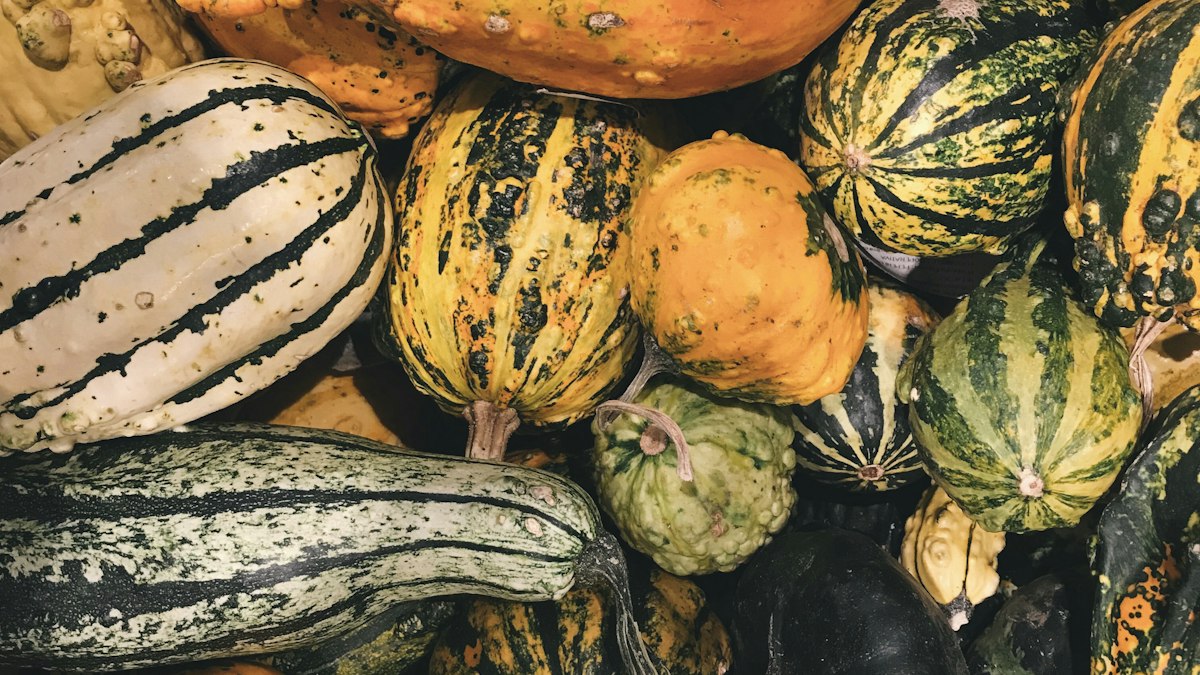
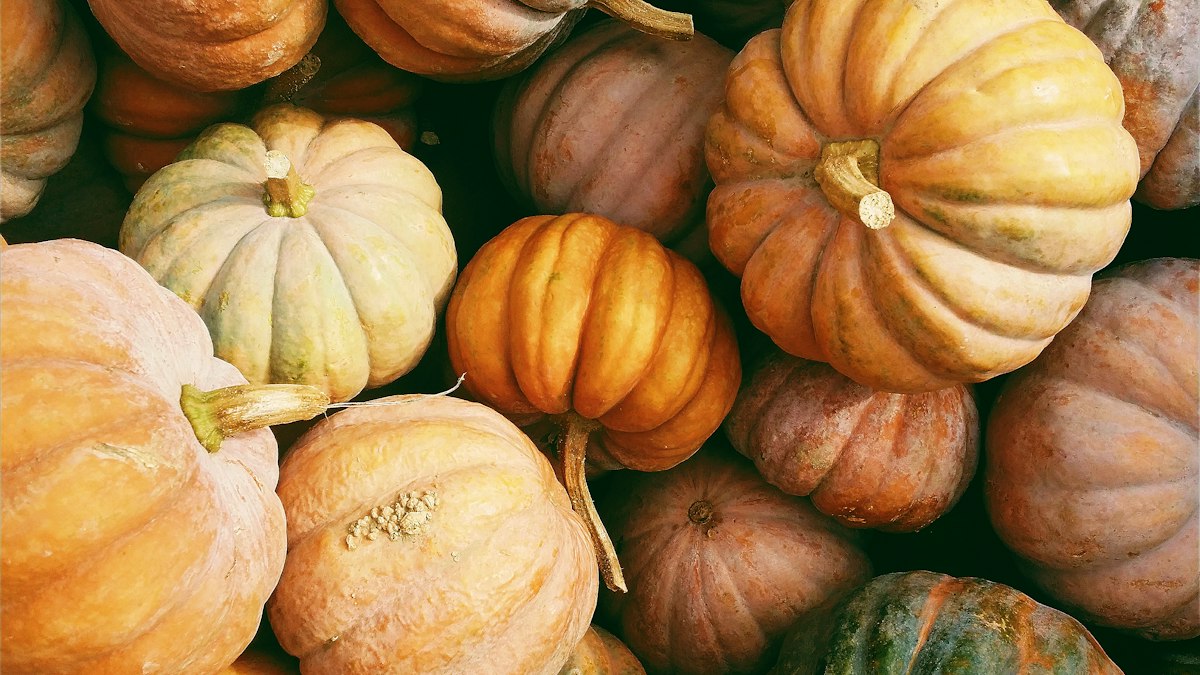
- Winter squash: Choose a sturdy squash that feels heavy for its size with a hard, unblemished rind and a stub of stem still attached — Illinois Extension notes a cut-short stem is "like an open wound" that invites decay. Our winter squash buying guide covers butternut, acorn, and more.
- Brussels sprouts: Pick tight, compact, bright-green heads; pass on any that are yellowing or loose-leafed.
Standing at the apple bins unsure whether that deal is actually fresh? Scan it with PluckFresh and get a freshness read before it goes in your cart.
November: Thanksgiving's Supporting Cast
November's list reads like a Thanksgiving shopping trip — and if that's exactly what you're planning, our Thanksgiving produce shopping guide maps the whole holiday haul. Good Morning America's guide has cauliflower and parsnips in season now, and the Farmers' Almanac lists cranberries, sweet potatoes, and persimmons across its fall regional calendars.
- Cranberries: Fresh, firm cranberries actually bounce — the University of Maine Extension describes the classic bounce test — so choose deep-red, firm berries and skip any bag with soft or shriveled fruit.
- Sweet potatoes: Choose firm, smooth roots free of soft spots, cracks, or sprouting.
- Persimmons: Know your shape — squat Fuyus are eaten firm like an apple, while acorn-shaped Hachiyas must be completely soft before eating, per Persimmons.org. Our persimmon ripeness guide shows both side by side.
- Parsnips: Pick firm, small-to-medium roots; huge ones can be woody at the core, and limp ones are old.
- Cauliflower: Look for compact, creamy-white heads with fresh green leaves and no brown speckling.
Persimmons trip up more shoppers than almost anything else in the fall aisle — when in doubt, scan one with PluckFresh and let the app tell you whether it's ready to eat now or needs more time on the counter.
December: Citrus Season Begins
As the fall harvest winds down, the cold-weather champions take over. The Farmers' Almanac winter calendar lists oranges, tangerines, mandarins, and grapefruit alongside leeks, beets, cabbage, and hardy greens for December through February.
- Citrus (oranges, tangerines, mandarins, grapefruit): Choose fruit that feels heavy for its size — that heft is juice — and smells fragrant at the stem end. Our winter citrus guide breaks down every variety hitting shelves now.
- Kale: Pick bunches with crisp, deeply colored leaves and moist stems; skip anything yellowing or wilted.
- Leeks: Choose firm stalks with white-to-pale-green bottoms and fresh, unwilted dark tops.
- Beets: Go for firm, smooth roots — and if the greens are attached, they should look fresh, not slimy.
- Cabbage: A good head feels heavy for its size with tight, crisp outer leaves.
Citrus is the trickiest scan-by-eye category of the season — a dull rind can hide a juicy interior. A quick PluckFresh scan settles the debate before you commit to a whole bag.
PluckFresh Tip
A pattern worth memorizing: for dense fall produce — winter squash, pomegranates, citrus, cabbage — "heavy for its size" is the single most reliable freshness signal. Weight means water and juice; lightness means the inside has dried out.
How to Use This Calendar at the Store
Put the calendar to work in three steps. First, shop the big seasonal displays — abundance is the store's signal that an item is at its price-and-flavor peak. Second, apply the one-line picking test for each item before it goes in your cart. Third, when a test is ambiguous — the squash stem looks iffy, the persimmon is somewhere between firm and soft — scan it with PluckFresh and get an instant freshness score instead of guessing.
The same playbook works even better at a farm stand, where produce is often picked the same day you buy it — our farmers market survival guide covers how to shop those tables like a regular, from timing your arrival to knowing what to skip.
Pro Tip
Regional timing varies, so let the market tell you where you are in the season. If figs and grapes are dwindling and persimmons are piling up, shop the November list even if it's still October on your phone.
FAQ: Fall Produce in Season
What produce is in season in the fall?
Fall produce in season from October through December includes apples, pears, pomegranates, figs, grapes, winter squash, and Brussels sprouts in October; cranberries, sweet potatoes, persimmons, parsnips, and cauliflower in November; and citrus, kale, leeks, beets, and cabbage in December. Exact timing varies by region, so check with local farmers and grocers.
Is fall produce really cheaper when it's in season?
Generally, yes. When a crop is abundant and locally harvested, prices tend to drop because there's more supply and less transportation and storage cost built into the price. In-season produce is also usually fresher, since it spends less time in transit between harvest and shelf.
What fruits are in season in October?
October is peak season for apples, pears, grapes, figs, and pomegranates in much of the U.S. It's also the heart of winter squash and pumpkin season. Pears are usually sold unripe and finish ripening on your counter, while apples, grapes, and pomegranates are ready to eat when you buy them.
How do you pick a good winter squash?
Choose a winter squash that feels heavy and sturdy for its size, with a hard rind free of soft spots, cuts, or cracks, and a piece of dry stem still attached. A missing stem exposes the squash to decay, and a rind you can easily dent with a fingernail means the squash was harvested immature.
Can you eat a persimmon while it's still firm?
It depends on the variety. Fuyu persimmons — the squat, tomato-shaped ones — are non-astringent and can be eaten while firm, like an apple. Hachiya persimmons — the elongated, acorn-shaped ones — are astringent and must be completely soft, almost jelly-like, before eating; a firm Hachiya is unpleasantly bitter.
Never Guess at the Produce Aisle Again
PluckFresh's AI-powered scanner checks the freshness of any fruit or vegetable in seconds — all season long. Free for iOS.
Download PluckFresh