The fastest way to tell if a pear is ripe: press gently near the stem end — the "neck" — with your thumb. If it yields to gentle pressure, the pear is ripe, sweet, and ready to eat. If you're squeezing the middle instead, you're testing the wrong spot: pears ripen from the inside out, so by the time the belly of the pear feels soft, the core is usually already mushy and overripe.
That one detail explains most pear disappointment: we squeeze the middle, wait for the whole fruit to soften, and end up with grainy, brown flesh at the core. In this guide, we'll cover why pears are sold rock-hard on purpose, how to run the neck test, how each major variety signals ripeness (most never change color), and how to speed ripening up or slow it down.
Why Pears Are Picked Hard on Purpose
Unlike apples, pears are one of the few fruits that don't ripen well on the tree. According to USA Pears, pears are harvested when they're mature but still unripe, and they need to finish ripening after harvest — which is why growers pick them firm and let time (and a little ethylene) do the rest.
So a rock-hard pear in the grocery display isn't a bad pear — it's an unfinished one. Depending on the variety, it needs a few days to a week on your counter to hit its buttery, juicy peak.
Check the Neck: The Thumb-Pressure Test
Because pears ripen from the inside out, the flesh near the stem is the first spot where ripeness shows on the surface. That's the logic behind the "Check the Neck" test recommended by USA Pears and echoed by Michigan State University Extension:
- Hold the pear in one hand, stem up.
- Press gently near the stem with your thumb — light pressure, not a squeeze.
- If the neck gives slightly, the pear is ripe, juicy, and ready to eat.
- If it's still firm, leave it at room temperature and check again tomorrow.
The corollary matters just as much: if the wide part around the middle feels soft, you've waited too long — the interior is past its peak, with grainy, browning flesh around the core. Check the neck daily once pears hit your counter; the window between "ripe" and "overripe" can be as short as a day or two.
Ripeness by Variety: Bartlett Tells You, Anjou and Bosc Don't
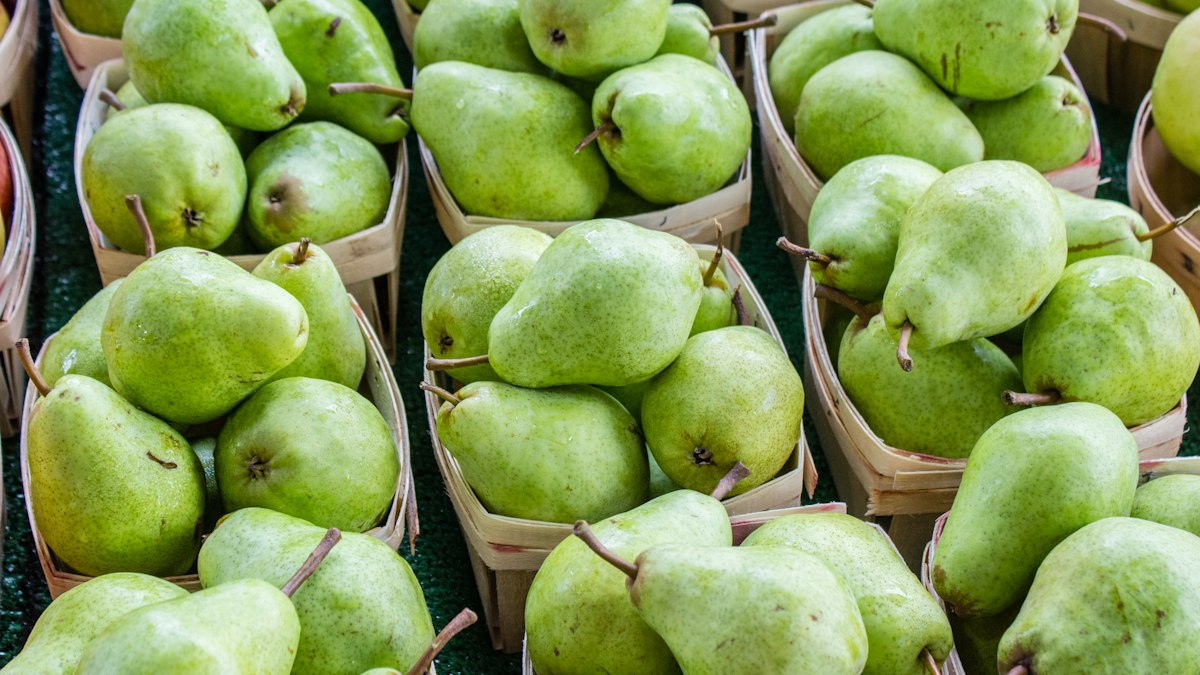
Here's where pears get sneaky. Per USA Pears, Bartlett pears change from green to yellow as they ripen — but non-Bartlett varieties like Anjou, Bosc, and Comice don't dramatically change color at all. For most pears in your fruit bowl, color tells you almost nothing — the neck test is the only reliable signal.
Bartlett: The Color-Changer
The classic canning and fresh-eating pear, and the one exception to the "color is useless" rule. A Bartlett shifts from grass green to golden yellow as it ripens, so you get a visual cue on top of the neck test. Per the University of Wyoming Extension, Bartletts typically ripen in four to five days at room temperature.
Anjou: Green When Hard, Green When Ripe
Anjou pears stay the same green (or red, for Red Anjou) from rock-hard to perfectly ripe — the University of Wyoming Extension specifically notes they show no color change upon ripening. Skip the visual inspection entirely and go straight to the neck.
Bosc: The Poker Face in Brown
Bosc's matte, cinnamon-russet skin looks essentially identical on day one and day seven. Along with Comice, Bosc needs more patience than Bartlett — five to seven days at room temperature to reach peak ripeness, per the University of Wyoming Extension and Oregon State University research on pear ripening. Bosc holds its shape beautifully, which makes it the go-to for poaching and baking even slightly before full ripeness.
Comice: Worth the Wait
The plump, squat Comice is the classic holiday gift-box pear, prized for sweet, juicy flesh. Like Bosc, give it five to seven days on the counter, and check daily — its delicate flesh moves from perfect to bruised quickly.
PluckFresh Tip
Anjou and Bosc give you no color cue at all — which is exactly where a second opinion helps. Scan your pear with PluckFresh's AI freshness scanner and it reads the subtle skin and texture signals you can't easily see, then tells you whether to eat it today, give it another day on the counter, or move it to the fridge.
Speed It Up or Slow It Down
Once you know pears finish ripening on your counter, you can steer the schedule instead of being surprised by it.
To Ripen Pears Faster
- Use the paper bag trick. Place underripe pears in a paper bag at room temperature. The bag concentrates the ethylene gas the fruit naturally releases while still letting it breathe.
- Add an ethylene booster. The University of Wyoming Extension recommends adding other ripening fruit like bananas or apples to the bag — both give off ethylene that speeds the process along. (That same gas is why bananas race through their own ripeness stages so quickly on your counter.)
- Keep them out of the fridge. Cold storage pauses ripening — a hard pear in the crisper drawer will still be a hard pear next week.
To Slow Ripening Down
- Refrigerate once ripe — and only once ripe. When the neck yields to gentle pressure, move pears to the fridge. USA Pears advises refrigerating ripe pears to slow further ripening; per the University of Wyoming Extension, they'll hold there for up to five days.
- Separate them from ethylene producers. Ripening pears parked next to bananas or apples will blow past their peak sooner than you expect — our guide to fruits and vegetables you should never store together maps out which counter neighbors to avoid.
- Stagger the ripening. Bought a whole bag? Leave half on the counter and hold the rest in the fridge while still hard, then bring them out a few days before you want them.
What to Do with Overripe Pears
Missed the window? As long as the flesh smells sweet (not fermented) and shows no mold, a soft pear is far from compost. Overripe pears are pre-sweetened and pre-softened, which makes them ideal for:
- Smoothies: Soft pear flesh blends silky-smooth — pair it with ginger, spinach, or yogurt.
- Pear sauce and pear butter: Treat them exactly like applesauce apples — simmer, mash, and spice. Browning flesh disappears into the pot.
- Baking: Fold diced overripe pears into muffins, quick breads, and crisps, where extra softness reads as extra moisture.
- Freezing: Peel, slice, and freeze on a sheet pan, then bag for future smoothies and baking.
- Oatmeal and pancakes: Mash very soft pears straight into batter or a warm bowl of oats.
Waste-Less Tip
Cut away any bruised or browned spots and judge the rest of the pear on its own merits. Trim generously, taste, and cook with what's left — a cosmetically ugly pear often makes the best pear butter.
FAQ: Pear Ripeness Questions
How can you tell if a pear is ripe?
Press gently near the stem end (the neck) with your thumb. If it yields to gentle pressure, the pear is ripe and ready to eat. Because pears ripen from the inside out, a pear that feels soft around the middle is usually already overripe — the neck is the most reliable spot to test.
Do pears ripen after they are picked?
Yes. Pears are one of the few fruits that do not ripen well on the tree. They are harvested when mature but still unripe, then finish ripening off the tree. A rock-hard pear at the store isn't a bad pear — it just needs a few days on your counter.
How long does it take a pear to ripen at room temperature?
It depends on the variety. Bartlett pears typically ripen in four to five days at room temperature, while Bosc and Comice pears need five to seven days to reach peak ripeness. Check the neck daily so you don't miss the window.
Should you store pears in the refrigerator?
Not until they're ripe. Let hard pears ripen at room temperature first, then refrigerate once the neck gives to gentle pressure. The cold slows further ripening, and ripe pears will keep in the fridge for up to five days.
What can you do with overripe pears?
Overripe pears are too soft for fresh eating but great for cooking. Blend them into smoothies, simmer them into pear sauce or butter, bake them into muffins and quick breads, or peel, slice, and freeze them for later. Only discard pears with mold or a fermented smell.
Never Miss a Pear's Peak Again
PluckFresh's AI-powered produce scanner reads ripeness cues you can't see — even on color-shy varieties like Anjou and Bosc. Free for iOS.
Download PluckFresh