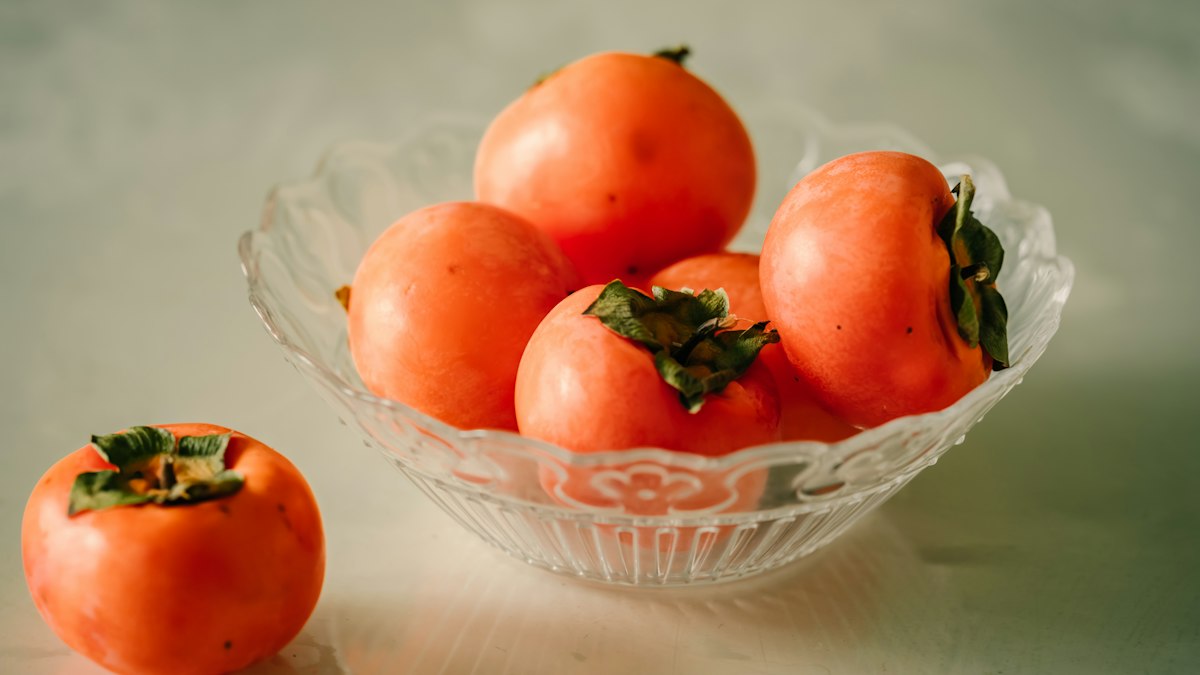
How to tell if a persimmon is ripe depends entirely on which of the two common types you're holding. A squat, tomato-shaped Fuyu is ready when its color is a full, deep orange — and you can eat it while it's still firm and crisp. An acorn-shaped Hachiya plays by the opposite rule: it isn't ripe until it feels shockingly soft, like a water balloon about to burst.
No other supermarket fruit punishes the wrong ripeness test this severely. Bite into a firm Hachiya and your mouth instantly goes dry, fuzzy, and puckered — unpleasant enough that plenty of shoppers swear off persimmons after one bad encounter. That's a shame, because a properly ripened persimmon is honey-sweet and arrives right when summer fruit disappears. Here's how to tell the two types apart and get the timing right.
Two Types, Two Completely Different Rules
Persimmons sold in U.S. grocery stores are divided into two classes: astringent and non-astringent. As Clemson Cooperative Extension puts it, the astringent type should be completely soft before eating, while non-astringent types are firmer and can be eaten before softening. Luckily, you can tell which class you're holding by shape alone:
- Fuyu (non-astringent): squat and flattened, like a small orange tomato. Eat it firm or soft — it's never astringent once its color has fully developed.
- Hachiya (astringent): larger, heart- or acorn-shaped, and pointed at the tip, per the University of Hawaii Cooperative Extension Service. It must be fully soft before you eat it.
What makes an unripe Hachiya so brutal? Tannins. According to University of Florida IFAS Extension, astringent persimmons are packed with soluble tannins that bind to the proteins in your saliva — making your mouth feel dry, causing puckering, and even numbing your tongue. As the fruit ripens, those tannins polymerize and become insoluble, so they can no longer grab your saliva — which is why the same fruit tastes like spiced honey once it's soft.
Fuyu: Eat It Crisp or Soft
Fuyu is the forgiving one — and the one you'll see most often, since it's the most widely grown persimmon cultivar in the world, according to Mississippi State University Extension. Because it's non-astringent, a Fuyu is ready as soon as it reaches full color. Per the University of Hawaii extension, Fuyu ripens on the tree and is ready to eat when harvested.
Here's what to look for at the store:
- Color: a deep, saturated orange all over, with no pale yellow or greenish patches.
- Feel: firm is fine — even ideal. A crisp Fuyu eats like a mildly sweet apple.
- Skin: smooth and glossy, free of soft spots or splits.
If you prefer a softer, sweeter bite, just wait: Mississippi State Extension notes that Fuyu flavor improves if the fruit is allowed to soften before eating. One quirk worth knowing: the same source cautions that non-astringent persimmons lose quality rapidly in the refrigerator, so keep Fuyus on the counter, where they hold for up to a week.
PluckFresh Tip
Not sure which kind you brought home — or whether it's ready? Scan it with PluckFresh's produce freshness scanner. The app identifies whether you're holding a Fuyu or a Hachiya and tells you if it's ready to eat now or needs more time on the counter. No more astringency roulette.
Hachiya: Wait Until It Feels Like a Water Balloon
Hachiya demands patience. It's astringent before softening, per the University of Hawaii extension, and there's no shortcut through a firm one — UF/IFAS is blunt that astringent persimmons cannot be eaten at the firm stage because of their high tannin content.
A ripe Hachiya is unmistakable once you know the feel:
- The water-balloon test: cradle it in your palm. A ripe Hachiya feels heavy, slack, and liquid inside — like a water balloon. If it has any of the firmness of an apple or a firm peach, it's not ready.
- The flesh: Mississippi State Extension says astringent persimmons are ready when they soften to the texture of pudding. Jelly-soft is the goal, not merely "gives a little."
- The color: deep reddish orange, fully developed with no yellow shoulders.
When in doubt, wait another day — a Hachiya that seems almost ready will still pucker your mouth.
Ripening Persimmons at Home
Firm Hachiyas are the smart buy — they'll finish ripening on your counter. Clemson Extension confirms persimmons continue to ripen after they're picked. Two ways to manage the timeline:
- The counter method: leave firm Hachiyas at room temperature and let the tannins break down naturally. It takes patience — often the better part of a week or more.
- The bag trick: to speed things up, UF/IFAS Extension recommends placing persimmons in a paper or plastic bag with an ethylene-producing fruit such as a ripe banana, apple, or tomato. The trapped ethylene accelerates softening and the loss of astringency.
That bag trick is the friendly side of the same ethylene chemistry that causes trouble elsewhere in your kitchen — the reason some fruits and vegetables should never be stored together.
For storage, the rules split by type again. Hard, still-astringent Hachiyas can be refrigerated for 4 to 5 weeks before you ripen them, and whole persimmons can be frozen for 6 to 8 months, per Mississippi State Extension. Once a Hachiya has softened, refrigeration prolongs its life, per the University of Hawaii extension. Fuyus, remember, stay on the counter.
Timing-wise, you'll find both types at their best in late fall — the University of Hawaii fact sheet lists harvest running from October into December. They're one of the stars of our fall produce calendar.
Pro Tip
Hachiyas ripening faster than you can eat them? The University of Hawaii extension notes persimmons can be peeled, pureed, and frozen — or frozen whole in plastic bags. Freeze the jelly-soft pulp in half-cup portions and you'll have persimmon bread material all winter.
Three Easy Ways to Use Them
1. Slice Fuyus Fresh
A crisp Fuyu is a no-cook ingredient: slice it into thin wedges or rounds, then toss into a fall salad with bitter greens and nuts, fan over a cheese board, or layer onto morning yogurt. Its apple-like crunch holds up wherever you'd use a firm pear.
2. Bake with Hachiya Pulp
That pudding-soft Hachiya flesh is a baker's shortcut. Slice off the top, scoop out the pulp with a spoon, and fold it into persimmon bread, muffins, or spiced cookies the way you'd use mashed banana or pumpkin puree. Its deep sweetness lets you ease back on added sugar.
3. Freeze for Later
Frozen persimmon puree drops straight into smoothies, and a whole frozen Hachiya, half-thawed, turns into a spoonable, sorbet-like treat. With 6 to 8 months of freezer life, per Mississippi State Extension, nothing has to go to waste.
FAQ: Persimmon Ripeness Questions
How can you tell if a persimmon is ripe?
It depends on the type. A Fuyu persimmon — squat and tomato-shaped — is ripe when its color is a full, deep orange, and it can be eaten while still firm and crisp. A Hachiya persimmon — larger and acorn-shaped with a pointed tip — is only ripe when it feels extremely soft all over, like a water balloon, with flesh the texture of pudding. A firm Hachiya is unpleasantly astringent.
Why does an unripe persimmon make your mouth feel dry and fuzzy?
Astringent persimmons like Hachiya are high in soluble tannins. When you bite into an unripe one, those tannins bind with the proteins in your saliva, which makes your mouth feel dry, causes puckering, and can even numb your tongue. As the fruit ripens, the tannins polymerize and become insoluble, so a fully soft Hachiya tastes sweet with no puckering at all.
Can you eat a Fuyu persimmon when it's still hard?
Yes. Fuyu is a non-astringent variety, so it's pleasant to eat while still firm — crisp and mildly sweet, similar to an apple. It's ready as soon as it reaches a full, deep orange color. If you prefer a softer, sweeter bite, let it sit at room temperature for a few days; the flavor improves as it softens.
How do you ripen a Hachiya persimmon faster?
Place the Hachiya in a paper or plastic bag with an ethylene-producing fruit such as a ripe banana, apple, or tomato and leave it at room temperature. The ethylene speeds up ripening and the loss of astringency. Without a bag, a firm Hachiya will still ripen on the counter — it just takes longer. It's ready when it feels soft and jelly-like all the way through.
Do persimmons need a frost before they're edible?
No — that's a myth. According to Clemson Cooperative Extension, frost is not required for persimmons to be edible, and frost can actually ruin immature fruit still on the tree. What astringent persimmons need is time to soften fully, not cold weather.
Fuyu or Hachiya? Ready or Not? Scan It.
PluckFresh's AI-powered produce scanner identifies your persimmon and tells you whether to eat it now or give it more time. Free for iOS.
Download PluckFresh