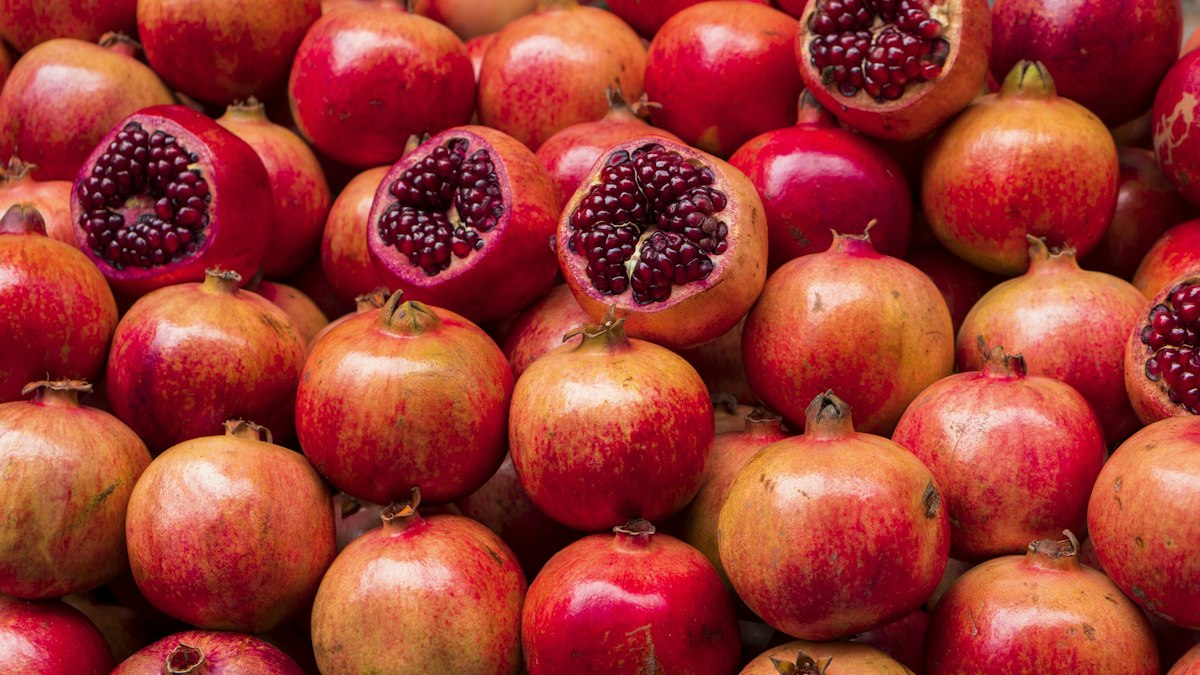
Here's how to tell if a pomegranate is ripe: pick it up. A ripe pomegranate feels heavy for its size, has slightly angular, squared-off sides rather than a perfectly round shape, and wears firm, leathery skin with no soft spots. Notice what's missing from that list — color. The deep-red-equals-ripe rule that works for strawberries and tomatoes simply doesn't apply here, and it's the number one reason shoppers bring home sour, pale-seeded pomegranates.
In this guide, we'll explain why color misleads, walk through the three tests that actually work, show you how to spot a pomegranate that's past its best, and cover storage and the mess-free way to get the seeds out.
Why Color Is the Wrong Test
Most of us learned to shop for fruit by color, so it feels natural to hunt for the reddest pomegranate in the bin. But pomegranate skin color varies widely by variety — some are deep crimson when ripe, others stay pink or even pale. Australian fruit specialist Thanh Truong, interviewed by ABC Everyday, puts it bluntly: weight and shape are more important than color, because a pomegranate "might still be green, and be very sweet and juicy."
There's a second reason color tells you little at the grocery store. According to guidance from the Pomegranate Council covered by PureWow, virtually any pomegranate you find in the produce section was already picked when relatively ripe — so the shade differences you see on the shelf reflect variety and growing conditions more than ripeness. The useful signals are the ones you can feel in your hand.
The 3 Tests That Actually Work
Ripeness in a pomegranate is really about one thing: how much juice is packed inside those seeds (called arils). All three reliable tests are ways of detecting that juice from the outside.
1. It feels heavy for its size
The Pomegranate Council calls weight one of the most effective ripeness tests: a ripe pomegranate is plump with juice and noticeably heftier than an unripe one. In practice, pick up two pomegranates of similar size and take the heavier one. Truong's advice is the same: a "really heavy" pomegranate is a juicy pomegranate.
2. The sides are angular, not perfectly round
This one surprises people. As the arils swell with juice, they press against the rind from the inside, flattening it into subtle facets. Per the Pomegranate Council's guidance, a mature pomegranate looks flatter at the stem and blossom ends, with sides that appear more squared — and the more perfectly round a pomegranate is, the less likely it is to be ripe. ABC Everyday's fruit expert agrees: angular edges mean the fruit plumped up with moisture on the tree, while a very circular pomegranate may be immature and sour.
3. The skin is firm and leathery, with no soft spots
Ripe pomegranate skin should feel firm and taut but take on a slightly soft, leathery quality — PureWow notes that mature skin even scratches easily. Squishy patches are a different story: they signal bruising or decay, not ripeness. Interestingly, a small crack in the rind isn't automatically a defect — per the same Pomegranate Council guidance, splitting can be a sign the fruit is bursting with juice, and NC State Extension notes that cracking around the crown hints the fruit is ripe. Just use cracked fruit quickly.
Not Sure? Scan It.
Standing in the produce aisle second-guessing the weight test? Point the PluckFresh scanner at a pomegranate and get an instant freshness read, plus advice on whether to eat it now or store it. It works on avocados, bananas, berries, and dozens of other fruits and vegetables too.
Signs a Pomegranate Is Past Its Best
The same hands-on tests work in reverse. Put a pomegranate back if you notice:
- It feels light for its size. A pomegranate that seems hollow has lost moisture — the arils inside are drying out.
- Soft, sunken, or mushy spots. Localized squishiness means bruised or decaying arils underneath.
- Wrinkled, dried-out skin. A little leathery is good; shriveled and papery means the fruit is old.
- Mold or dark, wet patches around the crown or on the rind.
- Brown, mushy arils inside. Ripe arils are plump and jewel-like. If you open one to find soft brown seeds or a fermented smell, it's compost.
Pomegranates Don't Ripen After Picking — So Pick Right at the Store
Here's the part that makes pomegranate selection genuinely high-stakes: pomegranates are non-climacteric fruits. As Iowa State University Extension explains, non-climacteric fruits — a group that also includes grapes, cherries, and pineapples — reach their peak sweetness and flavor on the plant and stop developing once harvested.
That's the opposite of how avocados and bananas behave. A rock-hard avocado will soften beautifully on your counter in a few days (our guide to picking ripe avocados covers exactly how to time it). A sour pomegranate, on the other hand, will still be sour next week. There's no paper-bag trick, no windowsill rescue. The quality you choose at the store is the quality you'll eat — which is why the weight, shape, and skin tests above are worth the extra ten seconds.
Timing helps too. Fresh pomegranates are usually in U.S. stores from October through December, according to NC State Extension — peak season, when fruit is most likely to have been picked at full ripeness. They share the fall spotlight with persimmons, squash, and apples; see our fall produce calendar for what else to grab while it's at its best.
Storing Your Pomegranate (and the Easy Way to Seed It)
The good news about non-climacteric fruit: because it isn't racing toward overripeness, a well-chosen pomegranate keeps remarkably well.
Storage that actually lasts
- Whole, in a cool dry spot: about a month, per NC State Extension.
- Whole, in the refrigerator: up to two months in a plastic bag, per the same NC State guidance.
- Seeded arils: refrigerate and eat within about four days — or freeze them, which NC State notes works well for longer keeping.
The no-mess seeding method
Pomegranate juice stains, so the smartest place to open one is underwater. NC State Extension recommends the water-bowl method:
- Score the rind lightly around the fruit — just deep enough to cut the skin, not the arils.
- Submerge the pomegranate in a large bowl of cold water and gently pull it apart with your thumbs.
- Work the arils free underwater. The arils sink to the bottom while the white pith and rind float.
- Skim off the floating pith, drain the arils, and pat dry.
Prefer to keep things dry? Truong's method is to carve out the top like a pumpkin lid, score along the ridge lines, break the fruit into segments by hand, then hold each segment cut-side down over a bowl and tap the back with a wooden spoon — the arils rain out.
FAQ: Pomegranate Ripeness Questions
How can you tell if a pomegranate is ripe at the store?
Skip the color test and use your hands. A ripe pomegranate feels heavy for its size (it's full of juice), has slightly angular, squared-off sides rather than a perfectly round shape, and has firm, leathery skin with no soft spots. If two pomegranates are the same size, choose the heavier one.
Will a pomegranate ripen after you buy it?
No. Pomegranates are non-climacteric fruits, which means they stop ripening the moment they're picked. Unlike bananas or avocados, a pomegranate will never get sweeter on your counter — the ripeness it has at the store is the ripeness you'll get at home, so it pays to pick well.
What color should a ripe pomegranate be?
Color varies by variety and isn't a reliable ripeness test. Some pomegranates are deep red when ripe, while others stay pinkish or even pale and are still sweet and juicy inside. Commercial pomegranates are also picked when relatively ripe, so shade differences on the shelf tell you little. Judge by weight, shape, and skin instead.
How long do pomegranates last?
Whole pomegranates keep for about a month in a cool, dry spot and up to two months in a plastic bag in the refrigerator, according to NC State Extension. Once you remove the seeds, refrigerate them and eat within about four days — or freeze them for longer storage.
What's the easiest way to get the seeds out of a pomegranate?
Use the water-bowl method: submerge the pomegranate in a bowl of cold water, score it, and gently pull it apart under the surface. The seeds sink to the bottom while the white pith and rind float, and the water stops juice from splattering. Skim off the pith, drain, and you're done.
Pick the Right Pomegranate Every Time
PluckFresh's AI-powered scanner reads produce freshness in seconds, so you never gamble on a sour pomegranate again. Free for iOS.
Download PluckFresh