The best way to store apples is in the refrigerator — ideally in the crisper drawer, inside a plastic bag with a few holes punched in it, and well away from your leafy greens. Kept cold, apples stay crisp for weeks; left on the counter, a whole apple only holds up for about a week before it starts to soften, according to Michigan State University Extension. That one change — fridge, not fruit bowl — does more than anything else to stop mealy-apple waste.
October is peak apple season across most of the U.S., with more varieties on display than at any other time of year. (See our fall produce calendar for what else is in season October through December.) This guide covers how to pick a good apple, why refrigeration matters so much, which varieties to eat fresh versus bake into pie, and what to do with the ones going soft.
What to Look for at the Store
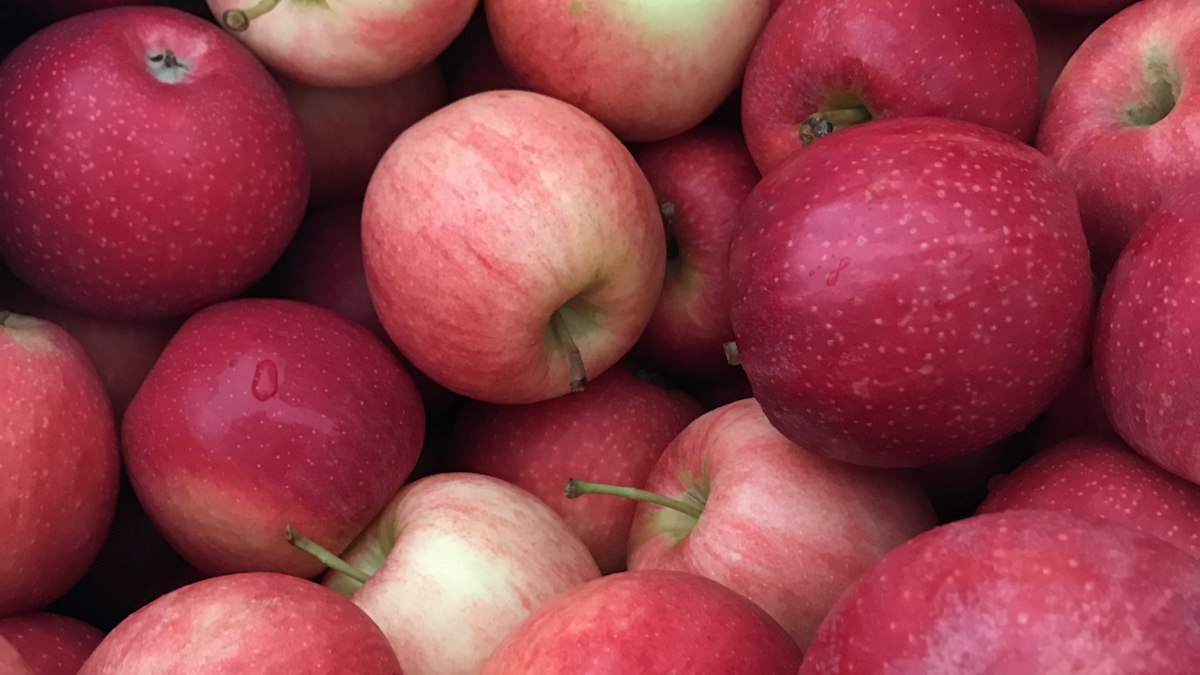
A great storage apple starts with a great apple. Whatever the variety, the fruit you bring home should be:
- Firm all over. Cup the apple in your palm and press gently — it should feel hard, with no soft spots or give. Softness is a sign the flesh underneath is already breaking down.
- Free of bruises. Clemson University's Home & Garden Information Center advises avoiding any bruising, because bruises lead to decay — and decay spreads from one apple to its neighbors in storage.
- Unbroken at the skin. Utah State University Extension recommends choosing fruit free of blemishes and breaks in the skin, since openings invite spoilage and decay.
Skip apples with punctures, shriveled skin, or wet-looking dark patches. Color is mostly about variety — a green-blushed Fuji can be in better shape than a uniformly red one.
One Bad Apple
The saying is real: bruised spots decay, and decay spreads — one damaged apple can take down the rest of the bag. Inspect each apple before storage, and pull any that soften later.
Fridge, Not Counter: Why Refrigeration Matters for Apples
Apples are built for cold. Commercial storage keeps them near 30–32°F at 90–95% relative humidity, and under those conditions varieties like Jonathan and Red Delicious can last three to six months, according to Iowa State University Extension. Warmth undoes that fast: the same guide notes that apples stored at 50°F spoil two to three times faster than apples held at 32°F — and your counter is warmer still.
The reason is ethylene, the natural ripening gas apples produce in abundance. Cold storage slows ethylene release and the ripening it drives, which is why MSU Extension says refrigerated apples last several weeks versus about one on the counter.
How to set up your fridge for apples
- Bag them with air holes. Clemson HGIC recommends placing apples in a plastic bag with a few holes to keep humidity up — low humidity is what makes stored apples shrivel.
- Use the crisper drawer. It's the coldest, most humidity-stable spot in most refrigerators.
- Keep them away from greens. More on this below.
- Check weekly. Remove any apple that's gone soft or picked up a bruise before it affects the others.
How long a specific apple will actually last depends on its variety, its handling, and the shape it's in today — which is what a PluckFresh scan estimates. Point the app at an apple and it returns a freshness window for that individual piece of fruit. Here's an example of what a scan result looks like:
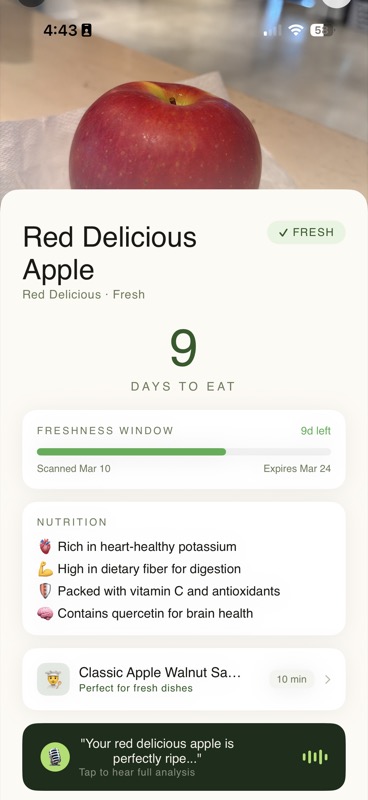
That window applies to that one apple in its current condition — a different apple from the same bag might score differently. That's the point: eat the short-window fruit first and let the rest wait.
Keep Apples Away From Your Greens
Apples are among the heaviest ethylene producers in the produce aisle. According to Penn State's College of Agricultural Sciences, most tree fruits produce large amounts of ethylene — particularly apples and pears — while ethylene-sensitive vegetables like broccoli, Brussels sprouts, cabbage, cauliflower, celery, collards, kale, lettuce, and spinach "turn yellow and go limp" when exposed to the gas.
In a shared crisper drawer, that means your apples are quietly wilting your salad. Penn State's fix is simple: keep ethylene producers bagged in one crisper and ethylene-sensitive produce in the other, tucked into paper bags rolled shut. Apples aren't the only offenders — our guide to fruits and vegetables you should never store together maps out the full list of bad produce roommates.
Pro Tip
Put all that ethylene to work. Need a rock-hard avocado or pear to ripen faster? Seal it in a paper bag with an apple. The trapped ethylene speeds ripening — the same chemistry that ruins lettuce, aimed at something you actually want softer.
Best Apples for Eating Fresh vs. Baking
Not every apple can do every job. The variety that shatters crisply out of hand can behave very differently under pie-crust heat, so it pays to match the apple to the plan before you buy.
For eating fresh
Sweet, juicy, thin-skinned varieties shine raw. University of Illinois Extension notes that Red Delicious is mainly suitable for snacking rather than baking or preserving, and crowd favorites like Honeycrisp, Gala, and Fuji are prized for out-of-hand eating. A note for meal planners: Clemson HGIC reports that harder varieties like Fuji and Pink Lady can keep five months or more in the right conditions, while softer ones like Gala and Golden Delicious may only last a few weeks — so buy Galas for this week and Fujis for next month.
For pies and baking
Pie apples need firm flesh that holds its shape and enough acidity to stay bright under sugar and heat. Illinois Extension's preserving guide recommends Granny Smith, Braeburn, Honeycrisp, Jonagold, Cortland, Empire, Golden Delicious, and Pink Lady, among others, for pies and baking. For whole baked apples, USU Extension suggests Braeburn, Fuji, or Golden Delicious.
Honeycrisp, Golden Delicious, and Pink Lady appear on both lists — if you want one bag to cover a week of lunches plus a weekend pie, those crossover varieties are the safe pick.
What to Do With Apples Going Soft
A soft apple is not a spoiled apple. Mealy texture is a quality problem, not a safety one — and heat erases it. USU Extension notes that apples past their crisp prime are better suited for cooking than fresh eating:
- Applesauce. The classic rescue. USU Extension lists Braeburn, Golden Delicious, Granny Smith, Jonathan, and Honeycrisp as good sauce apples — but any going-soft apple sauces well.
- Apple butter. Long, slow cooking concentrates flavor; Illinois Extension's sauce-and-butter list runs from McIntosh to Winesap.
- Baked apples. Core, stuff with oats and cinnamon, and bake — softness stops mattering.
- Everyday extras. Dice them into oatmeal, pancakes, or a pan sauce for pork.
The only apples that belong in the compost are the truly spoiled ones: visible mold, large mushy brown areas through the flesh, or a fermented, boozy smell. Everything short of that is dinner.
FAQ: Storing and Using Fall Apples
What is the best way to store apples?
Store apples in the refrigerator crisper drawer inside a plastic bag with a few holes punched in it. The cold slows ripening and the bag holds in humidity so the fruit doesn't shrivel. On the counter, whole apples only keep for about a week before they start to soften, so the fridge is the right home for any apples you won't eat within a few days.
How long do apples last in the refrigerator?
Refrigerated apples typically last several weeks. Firm, thick-skinned varieties like Fuji and Pink Lady can keep for months under cold, humid conditions, while softer varieties like Gala and Golden Delicious may only last a few weeks even when stored well. Check the bag weekly and pull out any apples that are softening or bruised.
Why should apples be kept away from lettuce and leafy greens?
Apples release large amounts of ethylene, a natural ripening gas. Ethylene-sensitive vegetables like lettuce, spinach, kale, broccoli, and celery turn yellow and go limp when exposed to it. Keep apples bagged in one crisper drawer and your greens in the other so the gas can't reach them.
Which apples are best for baking pies?
Firm, tart-to-balanced varieties hold up best in a pie. Extension guides recommend Granny Smith, Braeburn, Honeycrisp, Jonagold, Cortland, Empire, Golden Delicious, and Pink Lady for pies and baking. Red Delicious is best kept for snacking — it's not recommended for baking.
Can you still use apples that have gone soft?
Yes. An apple that's merely soft or mealy is still fine to cook — turn it into applesauce, apple butter, baked apples, or diced fruit for oatmeal and pancakes. Cooking hides the texture problem completely. Discard apples only if you see mold, large brown or mushy patches through the flesh, or the fruit smells fermented.
Know Which Apple to Eat First
Scan any apple with PluckFresh and get an AI freshness estimate for that exact piece of fruit — so nothing in the bag goes to waste. Free for iOS.
Download PluckFresh