To pick a good butternut squash, look for one that feels heavy for its size, has matte (not shiny) skin with even color, still has its stem attached and dry, and shows no soft spots, cuts, or bruises. Those four checks take about ten seconds — and they work for acorn, spaghetti, and delicata squash too.
Winter squash is the October staple most of us buy completely blind. Unlike a peach or an avocado, a squash gives away almost nothing to a casual glance: the shell is hard, the flesh is hidden, and two squash that look nearly identical can be months apart in quality. The good news is that squash does telegraph its condition — you just have to know which signals to read. Here's exactly what to check at the store, what separates the four most common varieties, and how long each one keeps once you get it home. (For everything else worth grabbing this month, see our fall produce calendar for October through December.)
The Four Checks: How to Pick a Good Winter Squash
Check 1: It Should Feel Heavy for Its Size
Pick the squash up. A good one feels denser than it looks — that weight is moisture in the flesh, and it's the single most reliable sign of quality. According to Taste of Home, a ripe butternut squash should be hard and heavy for its size; if it feels light, it's not ripe enough. UMass Extension's Harvest of the Month guide gives the same advice: choose squash that feels heavy in the hand.
Not sure what "heavy" means for a butternut? Lift two or three from the bin and compare — the difference is usually obvious.
Check 2: Matte Skin, Not Shiny
This one is counterintuitive, because with most produce a glossy surface reads as "fresh." With winter squash it's the opposite. A shiny or waxy-looking rind is a sign the squash was picked too early, before it matured fully on the vine — both Taste of Home and UMass Extension call this out explicitly. What you want is a dull, matte finish with even color across the whole surface: uniform tan for butternut, deep green for acorn, pale yellow for spaghetti.
The rind should also be genuinely hard. Taste of Home suggests a quick fingernail test: press gently into the skin. If your nail pierces it easily, the shell hasn't hardened and the squash won't keep.
Check 3: An Intact, Dry Stem
The stem is a small detail that tells you a lot. You want a squash with its full stem still attached, dry and firm to the touch — per Taste of Home, a squash with an intact stem will keep longer, and a missing stem suggests it's past its prime. The stem scar is also the most common entry point for rot, so a squash that's lost its stem has an open door for decay.
The University of Nebraska–Lincoln's food guide adds the negative version of the same rule: avoid winter squash with moist, black, or shriveled stems. A wet or blackened stem means moisture is getting in — or decay is already underway.
Check 4: No Soft Spots, Cuts, or Bruises
Finally, turn the squash over and run your hand across the whole surface, especially the blossom end opposite the stem. Taste of Home advises staying away from any squash with obvious cuts or soft spots that could lead to rot or mold, and UMass Extension says to choose squash without bruises or mold. A hard shell is winter squash's whole preservation strategy — any break in it, however small, starts the clock on spoilage.
PluckFresh Tip
Soft spots are easy to feel once they're advanced — the problem is the early ones you can't. PluckFresh's AI freshness scanner reads the subtle surface cues that precede a visible soft spot: sunken patches, early discoloration around the stem scar, and skin-texture changes that are hard to catch under store lighting. Scan before you buy — or scan the squash that's been on your counter for six weeks to decide if it's still roast-worthy.
Butternut vs. Acorn vs. Spaghetti vs. Delicata: What's Different
The four checks above apply to all winter squash. Where the varieties really diverge is texture, best use, and — crucially — how long they keep.
Butternut
The tan, bell-shaped workhorse. Dense, sweet orange flesh with a small seed cavity, which means more usable squash per pound than almost any other variety. It's the best all-rounder for soups, roasting, and purees, and UMass Extension notes it's an excellent source of vitamin A and potassium, with beta-carotene behind that orange color. It's also one of the better keepers — more on that below.
Acorn
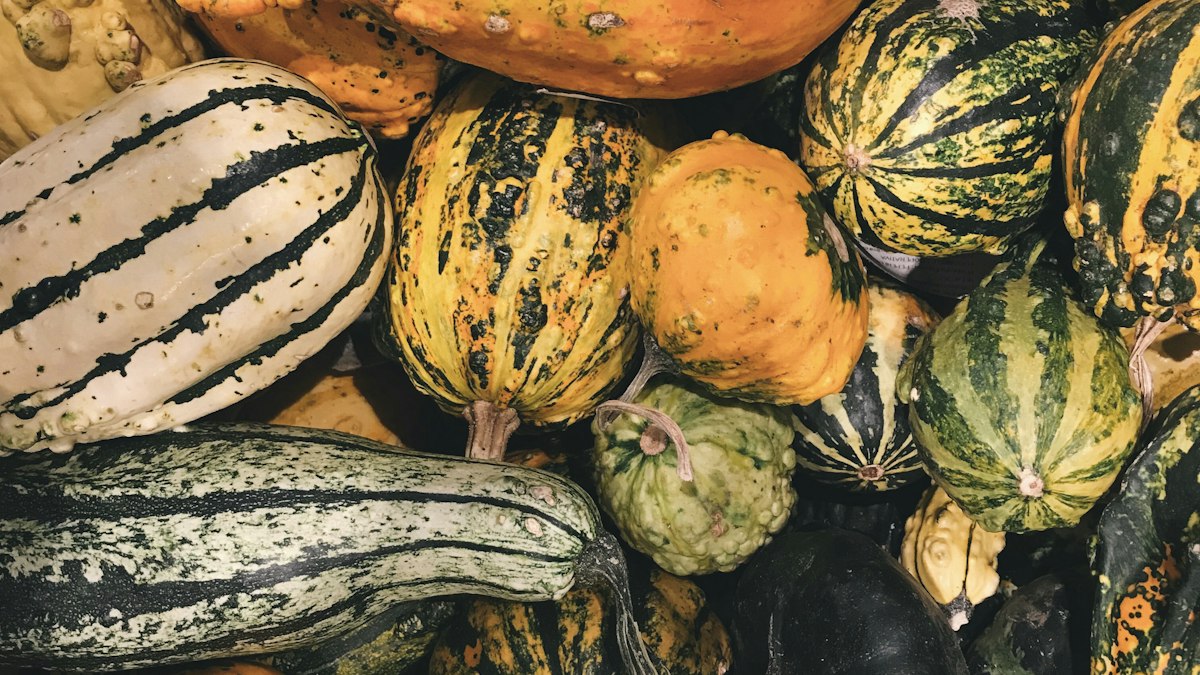
Small, ridged, and dark green, with milder, slightly nutty flesh. The size makes it perfect for halving and roasting — each half is a single serving with a built-in bowl for butter or stuffing. The trade-off: acorn has the shortest storage life of the classic hard squash, roughly 5 to 8 weeks according to Iowa State University Extension, so eat it weeks ahead of your butternuts.
Spaghetti
Pale yellow and oblong, spaghetti squash is the outlier: when cooked, its flesh separates into noodle-like strands rather than a smooth mash, which is why it's the go-to pasta stand-in. Flavor is mild, so it takes sauces well. Per the University of Nebraska–Lincoln, kept in a dry place between 55 and 60°F it will store for up to 3 months.
Delicata
The small cream-and-green striped one — and the easiest to cook, because its thin skin is edible once roasted. No peeling: just slice into rings, scoop the seeds, and roast. That delicate skin is also its weakness. Colorado State University's Kendall Reagan Nutrition Center notes that while delicata usually lasts around 3 months in cool, dry storage, it doesn't keep as long as harder-shelled squash — historically its skin couldn't even survive long shipping. Treat it as an eat-soon squash rather than a countertop decoration.
Storage: Cool and Dry — Not the Fridge
Here's the mistake that undoes a perfectly picked squash: putting it in the refrigerator. Whole winter squash wants to be cool, not cold. Iowa State University Extension recommends a cool, dry, well-ventilated location at 50 to 55°F, and University of Minnesota Extension echoes it: a cool but not cold place, ideally around 55°F, with good air movement. Your fridge runs well below that range — in practice, a basement, garage that doesn't freeze, pantry, or cool closet beats the crisper drawer. A cool kitchen counter away from the oven works fine for squash you'll eat within a few weeks.
Two more rules from the same Iowa State guidance:
- Keep squash away from ripening fruit. Apples, pears, and other ripening fruit release ethylene gas, which shortens squash's storage life.
- Know each variety's clock. Properly stored, acorn keeps roughly 5–8 weeks and butternut 2–3 months, per Iowa State — and UMass Extension likewise puts whole butternut at up to three months in cool, dry conditions. Eat acorn and delicata first; let butternut and spaghetti wait.
The fridge does have a role — after cutting. Once a squash is peeled or cut, UMass Extension says to refrigerate it in a covered container and use it within about five days.
Pro Tip
Buying several squash in October for the months ahead? Label them with a marker — variety and purchase date — right on the rind. It costs nothing, and in December you'll know exactly which squash is on borrowed time.
FAQ: Picking and Storing Winter Squash
How do you pick a good butternut squash?
Choose one that feels heavy for its size, with matte (not shiny) skin in an even tan color, an intact stem that's dry and firm, and no soft spots, cuts, or bruises. The rind should be hard enough that your fingernail can't easily pierce it.
Why shouldn't butternut squash skin be shiny?
Shiny or waxy-looking skin is a sign the squash was picked too early, before it fully matured on the vine. A mature butternut has a dull, matte finish with even color. Under-mature squash tends to be less sweet and won't store as long.
How long does butternut squash last?
A whole butternut squash keeps for roughly two to three months in cool, dry conditions — around 50 to 55°F with good ventilation. Once peeled or cut, refrigerate it in a covered container and use it within about five days.
Should you store winter squash in the refrigerator?
Not whole squash. Extension guidance recommends a cool but not cold spot around 50 to 55°F — a basement, pantry, or cool closet — since a refrigerator is colder than winter squash likes. Save the fridge for cut or peeled pieces, which keep about five days in a covered container.
Can you eat delicata squash skin?
Yes. Delicata's thin skin is edible and pleasant once cooked, so there's no need to peel it — just slice, seed, and roast. That same delicate skin is why delicata generally doesn't store as long as harder-shelled squash like butternut.
Never Buy a Dud Squash Again
PluckFresh's AI-powered scanner checks freshness cues you can't feel through the shell — before you buy and all winter long. Free for iOS.
Download PluckFresh