Should your crisper drawer be set to high or low humidity? Here's the short answer: high humidity for vegetables, leafy greens, herbs, and anything that wilts; low humidity for fruits that ripen and rot, like apples, pears, avocados, and peaches. If you only have one drawer — or the mix of settings feels like guesswork — set it to high humidity and keep fruit on a shelf.
That little slider is one of the most ignored controls in the kitchen. Most of us shove produce into whichever drawer has room and hope for the best. But once you know what the slider actually does — and it's far less mysterious than it sounds — a simple two-drawer system can add days of life to your groceries.
What the Slider Actually Changes: Airflow, Not Magic
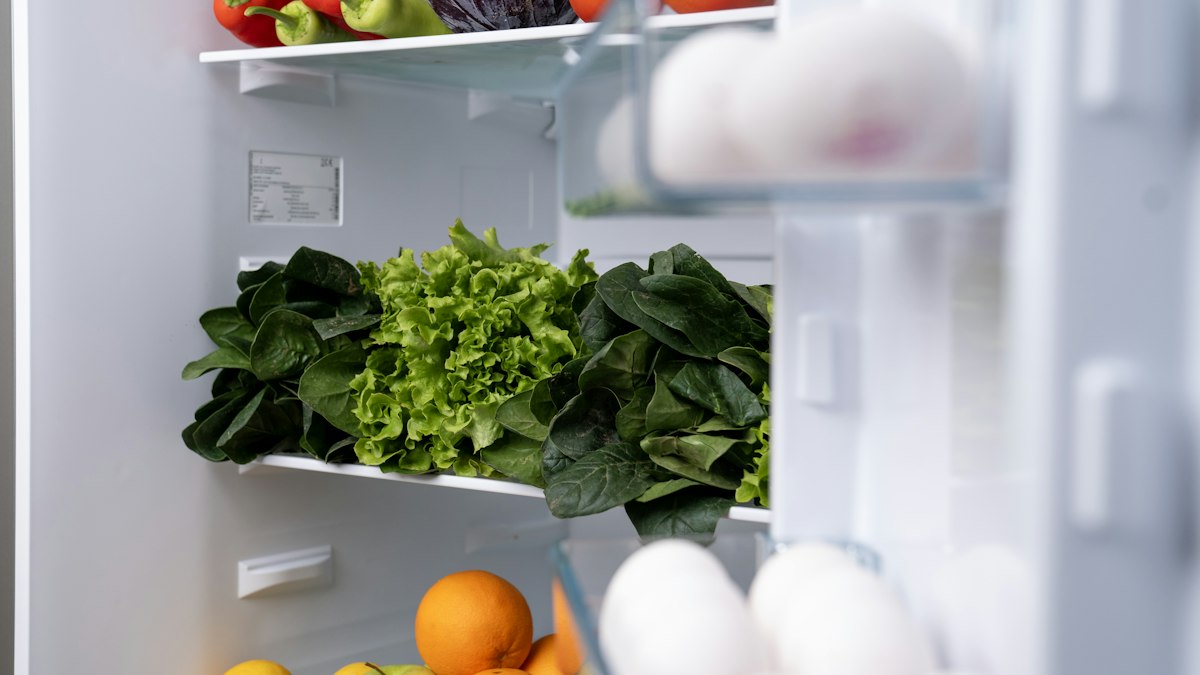
The humidity control on a crisper drawer is not a tiny humidifier. It's a vent. According to Whirlpool's crisper humidity guide, sliding the control to LOW opens the vent "to allow moist air out of the crisper," while sliding it to HIGH closes the vent "to keep moist air in the crisper." That's the entire mechanism.
Iowa State University Extension puts it plainly: the humidity setting "refers to the amount of space in the drawers left open to airflow." Vent closed, moisture released by your produce stays trapped in the drawer — that's high humidity. Vent open, moist air escapes into the rest of the refrigerator — that's low humidity.
Why does that matter? Because produce fails in two opposite ways. Some things die by drying out — lettuce wilts, herbs go limp, broccoli turns rubbery. Other things die by ripening too fast — and those fruits release ethylene gas as they ripen. As the University of Arkansas Cooperative Extension Service explains, ethylene is a naturally occurring plant hormone that triggers ripening — but too much of it for too long "will cause the produce to pass ripening and go to spoiling and rotting." A closed drawer traps ethylene; an open vent lets it out. One vent, two failure modes, two settings.
High Humidity (Vent Closed): Anything That Wilts
Close the vent for produce that loses moisture quickly. The trapped humidity keeps cell walls plump, which is what "crisp" actually means. Samsung's support guide recommends the high setting for "leafy-green vegetables and other items prone to wilting or moisture loss" — the same produce that sits under water spritzers at the supermarket.
Fill the high-humidity drawer with:
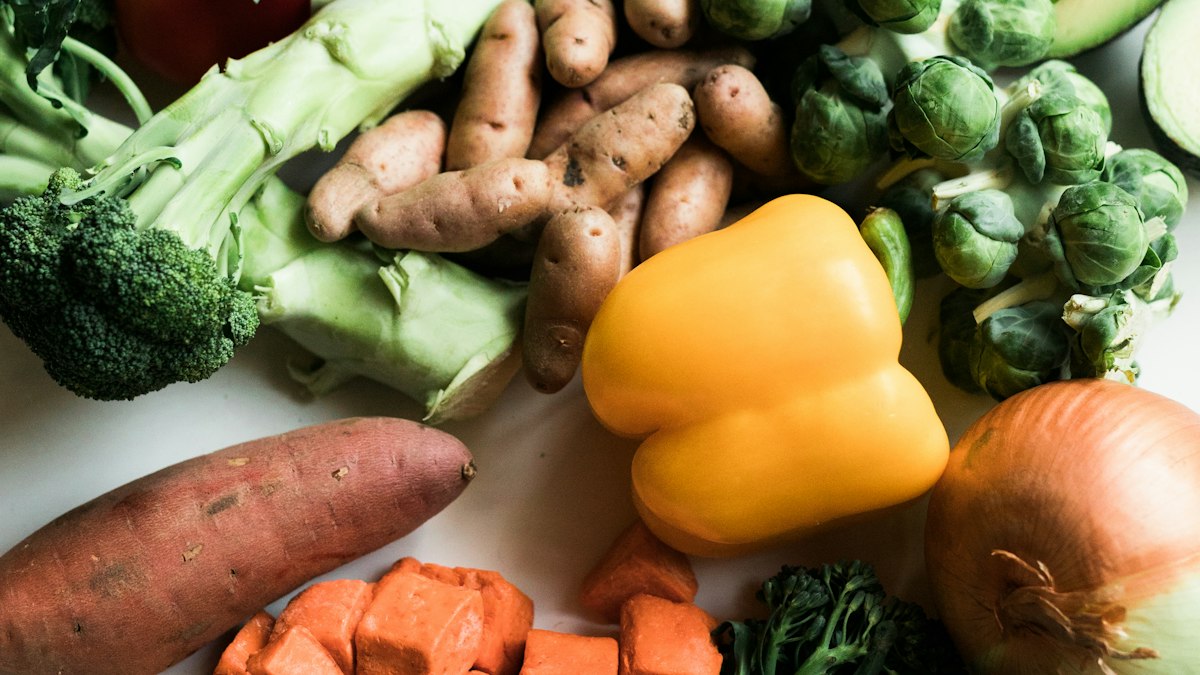
- Leafy greens: lettuce, spinach, chard, kale, and salad mixes
- Fresh herbs: cilantro, parsley, basil's cold-hardier cousins like mint and dill
- Cruciferous vegetables: broccoli, cauliflower, Brussels sprouts
- Crunchy staples: carrots, celery, cucumbers, green beans, asparagus
- Peppers, eggplant, and summer squash
There's a second reason vegetables belong behind a closed vent: most of them are ethylene-sensitive. The Arkansas extension guide notes the high-humidity drawer is exactly where ethylene-sensitive produce should live, safely separated from the fruit that gasses everything around it. Put an apple in with your spinach and you've built a small wilting chamber — the same chemistry behind the fruits and vegetables you should never store together.
PluckFresh Tip
Not sure where something goes? Scan it. Every PluckFresh scan comes back with a freshness score plus storage advice for that exact item — including whether it belongs in the high- or low-humidity drawer, the fridge shelf, or the counter.
Low Humidity (Vent Open): The Ethylene Producers
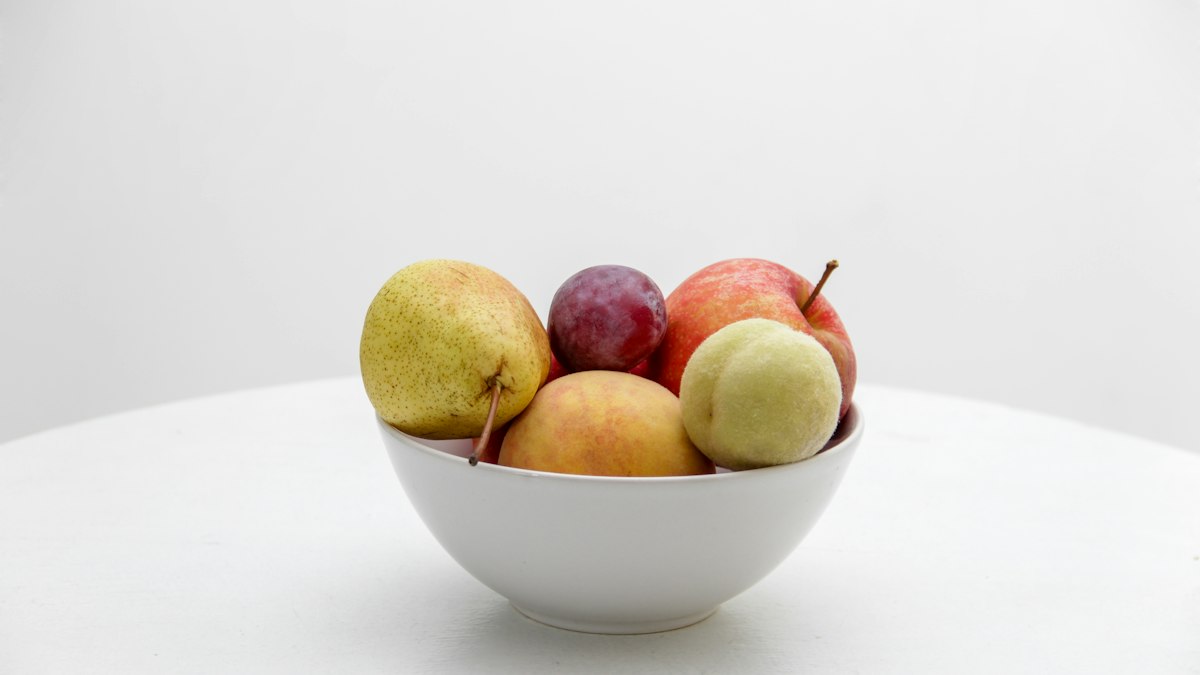
Open the vent for fruit that ripens after picking. These are the big ethylene emitters, and the open vent gives that gas an exit route instead of letting it accumulate. Per the University of Arkansas extension guide, the low-humidity drawer — sometimes labeled the fruit drawer — "lets out some of the ethylene gases that lead to faster rotting, thereby keeping fruits and vegetables longer."
Fill the low-humidity drawer with:
- Apples and pears — two of the most prolific ethylene producers in the produce aisle
- Avocados (once ripe — let them finish ripening on the counter first)
- Stone fruit: peaches, plums, nectarines, apricots
- Melons: cantaloupe and honeydew, cut or whole once ripe
- Tropical fruit: mangoes, papayas, kiwi
These fruits also tolerate the drier air because most of them have skins that hold moisture in — Whirlpool describes the low setting as being for "fruits and vegetables with skins." An apple won't wilt at low humidity. Spinach absolutely will.
One caveat before you sweep every fruit into this drawer: some produce shouldn't be in the refrigerator at all. Bananas, potatoes, sweet potatoes, dry onions, and garlic keep best outside the fridge, and Iowa State Extension recommends the counter for tomatoes too. Our produce storage chart maps counter vs. fridge vs. pantry for the whole grocery haul.
Only One Drawer? Default to High Humidity
Plenty of refrigerators have a single crisper, or two drawers where only one has a working slider. The tiebreaker is simple: set it to high humidity and give it to your vegetables.
Here's the logic. Wilt-prone produce is punished hardest by the wrong environment — greens in a dry, open-vented drawer can go limp in a day or two, while an apple on an ordinary fridge shelf is barely bothered. That's why Frigidaire's guidance is that "leafy vegetables keep best when stored with the humidity control set on HIGH, or in a drawer without a humidity control" — and why the Arkansas extension guide identifies the high-humidity drawer as "the one that is closed up all the way or that doesn't have any controls at all." A drawer with no vent is a high-humidity drawer whether it says so or not.
So with one drawer:
- Set the slider to high (vent closed), or do nothing if there's no slider.
- Load it with greens, herbs, and wilt-prone vegetables.
- Keep ethylene-producing fruit — apples, pears, ripe avocados, stone fruit — on a refrigerator shelf, away from the drawer.
The Two-Drawer Cheat Sheet (Screenshot This)
Everything above, compressed into the version worth saving to your camera roll:
Drawer 1 — HIGH humidity (vent CLOSED): things that wilt
- Lettuce, spinach, kale, chard, salad greens
- Fresh herbs
- Broccoli, cauliflower, Brussels sprouts
- Carrots, celery, cucumbers, green beans, asparagus
- Peppers, eggplant, squash
Drawer 2 — LOW humidity (vent OPEN): things that rot
- Apples and pears
- Ripe avocados
- Peaches, plums, nectarines, apricots
- Cantaloupe, honeydew, kiwi
- Mangoes and papayas
Not in the fridge at all
- Bananas, potatoes, sweet potatoes, dry onions, garlic — and ripening tomatoes
Memory Trick
Rot needs airflow out; wilt needs moisture in. "Low lets it out, high holds it in." If you remember nothing else, remember that fruits generally like low humidity and vegetables like high — the general rule Iowa State Extension teaches, with only a few exceptions.
FAQ: Crisper Drawer Humidity Questions
Should my crisper drawer be set to high or low humidity?
It depends on what's inside. Use high humidity (vent closed) for vegetables, leafy greens, herbs, and anything that wilts. Use low humidity (vent open) for ethylene-producing fruits like apples, pears, avocados, and stone fruit. If one drawer holds a mix, set it to high humidity — wilt-prone vegetables suffer more from the wrong setting than most fruit does.
What does the crisper drawer humidity slider actually do?
It opens and closes a small air vent. Sliding to low opens the vent so moist air and ethylene gas can escape the drawer; sliding to high closes the vent so moisture stays trapped inside with your produce. There's no separate humidifier — it's purely airflow control.
Which fruits go in the low humidity drawer?
Ethylene-producing fruits: apples, pears, avocados, peaches, plums, nectarines, apricots, mangoes, papayas, cantaloupe, honeydew, and kiwi. The open vent lets the ethylene gas they release escape instead of building up and pushing everything in the drawer toward over-ripening and rot.
What if my refrigerator has only one crisper drawer?
Set it to high humidity and use it for vegetables, greens, and herbs — the produce that wilts fastest. Keep ethylene-producing fruits like apples and pears on a refrigerator shelf instead. A drawer with no humidity control at all is effectively a high-humidity drawer, since the vent is what creates the low-humidity setting.
Why did my lettuce wilt in the crisper drawer?
Two usual suspects: the drawer's vent was open (low humidity), letting the moisture that keeps leaves crisp escape, or the lettuce shared the drawer with ethylene-producing fruit like apples or pears, which accelerates yellowing and decay. Move greens to a closed-vent, high-humidity drawer with no fruit inside.
Storage Advice for Every Scan
PluckFresh's AI scanner scores your produce's freshness and tells you exactly where to store it — drawer, shelf, or counter. Free for iOS.
Download PluckFresh